
What Is Scale In Interior Design

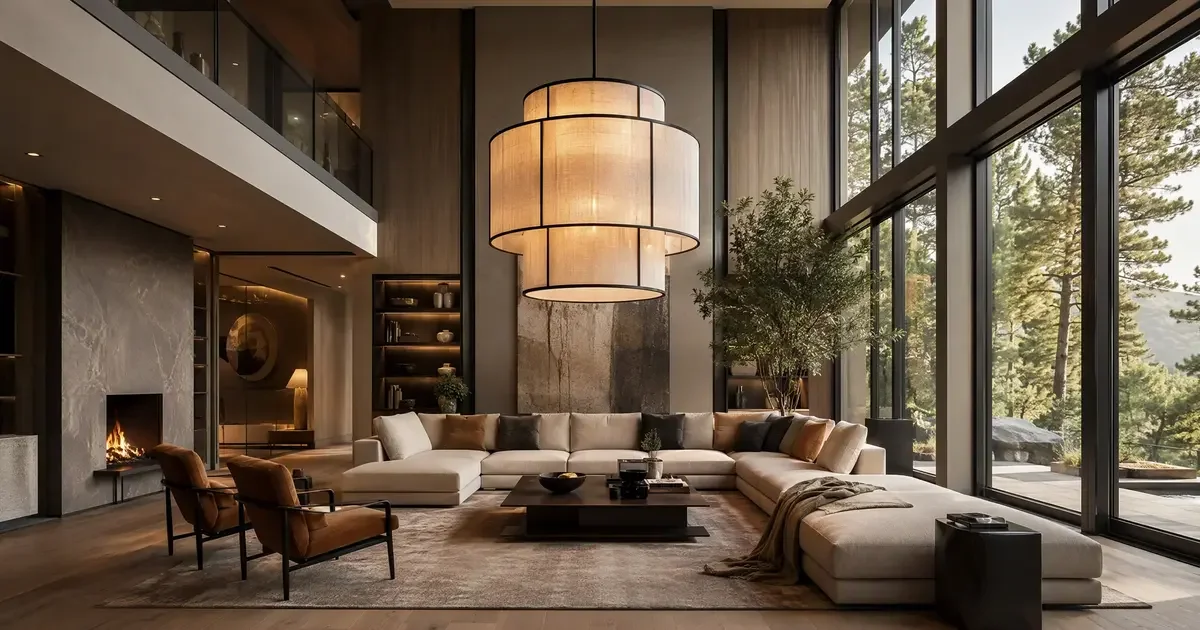
What Is Scale In Interior Design
There is a reason certain rooms feel effortlessly composed while others, decorated with equally beautiful pieces, feel somehow restless or wrong. The furniture is fine. The colors are fine. The materials are fine. And yet the room does not settle. In most cases, the culprit is scale. Understanding what scale in interior design is is the single most useful piece of design knowledge a homeowner can have, because scale errors are invisible until they are named and then impossible to unsee.
Scale Defined: The Relationship Between Objects And Their Environment
Scale in interior design refers to the size of objects in relation to the space around them and to each other. A piece of furniture is not large or small in any absolute sense. It is large or small relative to the room it occupies, the ceiling height above it, the windows beside it, and the other pieces sharing the space with it. Scale is always relational.
This is why a sofa that looked right in a showroom can feel enormous in a living room, or why a dining table that seemed generous at a store reads as too small once it is surrounded by the walls, windows, and chairs of an actual room. The object has not changed. Its context has.
The Difference Between Scale And Proportion
Scale and proportion are related but distinct. Scale describes the size of something in relation to its environment. Proportion describes the ratio of parts to the whole within a single object or grouping. A chair can be correctly scaled to a room but poorly proportioned in itself, with arms that are too heavy for the seat or legs that are too slight for the frame. Both scale and proportion need to be right for a room to feel resolved.
Understanding scale in interior design without also understanding proportion is like knowing the volume of a conversation without being able to judge its tone. The two pieces of information are both necessary.
How Scale Errors Happen
The most common scale errors in residential interiors are rugs that are too small, sofas that are too large, artwork that is too small for the wall it is on, and light fixtures that are sized for a smaller room. Each of these errors produces a specific visual problem.
A rug that is too small makes the seating arrangement above it look as though it is floating, disconnected from the floor and from the room. A sofa that is too large crowds the room and makes everything else in it look smaller by comparison. Artwork that is too small on a large wall looks tentative, as though the room does not quite know what it is trying to say. An undersized light fixture in a generous room looks like an afterthought.
None of these errors are permanent, but all of them are expensive to correct after the fact. Thinking carefully about scale in interior design before anything is purchased is the most effective way to avoid them.
How To Evaluate Scale Before You Buy
The most reliable method is a scaled floor plan. Drawing the room to scale on graph paper and then drawing the furniture pieces at the same scale allows you to check every piece against the room before anything is ordered. Tape on the floor, outlining the footprint of a proposed sofa or dining table, is another useful tool. Standing in the taped outline and looking at the room around it gives a much more accurate impression of how the piece will read than any photograph can.
For artwork and lighting, holding large sheets of paper or cardboard in the proposed location gives a sense of how the size will read on the wall or from the ceiling. These are low-tech methods, but they are what professional designers use because they work.
Scale In A Whole-Home Design Context
In a whole-home interior design project, scale decisions are made across every room in relationship to one another. A hallway that transitions into a generous living room needs furnishings that acknowledge that transition. A kitchen that opens to a dining space needs pieces that read as part of the same visual conversation rather than two separate rooms that happen to be adjacent.
This is where working with an experienced designer makes the most difference. The designer holds the full picture of the home in mind as every individual scale decision is made, which is why well-designed homes feel cohesive in a way that self-designed homes rarely do, regardless of budget.
How Home Life Approaches Scale
Home Life by Rose Ann Humphrey has been navigating scale decisions across luxury residential projects for over three decades. With deep roots in New England design, primarily Boston, and a recent expansion into Charleston and the surrounding islands, Rose Ann brings the kind of trained eye for what scale is in interior design that only comes from years of working across homes of every size, style, and level of architectural complexity.
We want you to love how you live. Scale is one of the foundational tools for getting there. A room that is scaled correctly feels right the moment you enter it, often before you can articulate why. Getting that feeling into every room in your home is what a full-service design engagement with Rose Ann is built to deliver. Call Rose Ann at 617-360-1008 to begin that conversation.