
What Is Millwork In Interior Design

What Is Millwork In Interior Design
You have probably been in a room where the walls felt complete. Not just painted, not just wallpapered, but finished in a way that communicated quality and intention before you consciously noticed anything specific. In most cases, what you were responding to was millwork. Understanding what millwork in interior design is is one of the quickest ways to understand why certain homes feel architecturally rich and why others, even beautifully furnished ones, feel flat. Here’s what you need to know.
Millwork Defined
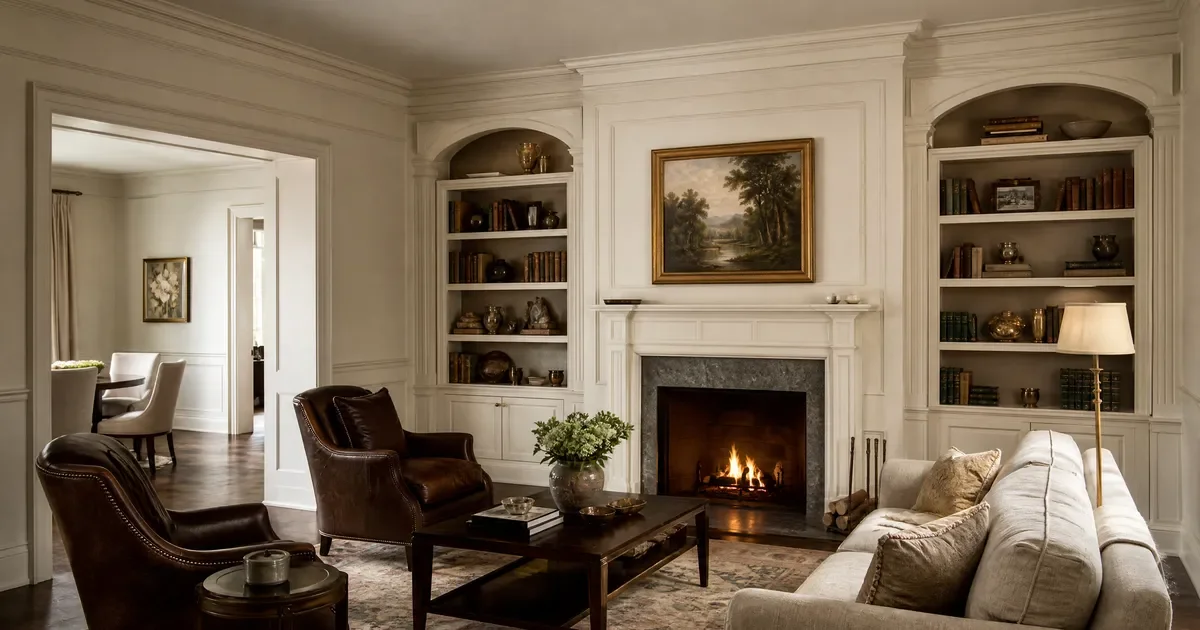
Millwork refers to the woodwork in a home that is produced in a mill and installed on-site: baseboards, crown molding, chair rails, wainscoting, door and window casings, built-in shelving, cabinetry, coffered ceilings, and architectural paneling. It is the woodwork that gives a room its architectural character, the detail that makes walls feel finished rather than just covered.
The term is broader than most homeowners realize. It encompasses everything from the simplest baseboard at the floor to the most elaborate custom built-in library wall. All of it falls under the category of what is millwork in interior design, and all of it has the same effect when done well: it makes a room feel considered from the inside out rather than decorated from the outside in.
Why Millwork Changes How A Room Feels
Millwork works by giving a room architectural identity. A space with no millwork beyond the minimum required baseboards and door casings has no visual hierarchy on its walls. The eye has nowhere to rest, nothing to read as intentional. Add a simple chair rail, and the wall suddenly has structure. Add wainscoting below it, and the room has warmth and formality. Add crown molding, and the ceiling is drawn into relationship with the walls in a way that makes the whole room feel more resolved.
This is why older homes, which were almost universally built with substantial millwork as a matter of course, tend to feel more architecturally complete than many contemporary builds where millwork was value-engineered out. The architecture of those older homes communicates quality through its woodwork in a way that is very difficult to replicate through furniture and décor alone.
Custom Versus Stock Millwork
Stock millwork refers to profiles and pieces that are manufactured in standard sizes and available at lumber yards and home improvement stores. It is a practical option for simple applications, and a skilled finish carpenter can produce results that read as intentional and well-designed.
Custom millwork is designed specifically for the room it will occupy: the exact height, the exact profile, the exact material and finish. For a whole-home renovation at a luxury level, custom millwork is the standard because it allows every architectural detail to serve the specific design direction of the home rather than conforming to what is available off the shelf.
The difference is visible. Custom millwork in a room at the correct scale and in the correct profile reads as architecturally authentic. Stock millwork in the wrong scale or profile reads as an add-on. Knowing what millwork in interior design is includes knowing which category a given project calls for.
Common Applications In Luxury Residential Design
In the high-end residential projects that Home Life undertakes, millwork applications most commonly include: coffered or beamed ceilings that add architectural depth without lowering the ceiling line; full-height paneled walls in studies, dining rooms, and primary suites; built-in cabinetry and shelving designed to serve specific storage and display functions; and window and door casings at a weight and profile appropriate to the architecture of the home.
Stair railings, newel posts, and balustrades are another major millwork category in multistory homes, and they represent one of the most visible architectural statements in any residence with an open staircase. The design of a staircase in relationship to the entry of a home is one of the most significant impressions a house can make, and it is almost entirely a millwork decision.
How Home Life Uses Millwork In Every Project
Rose Ann Humphrey of Home Life has worked with custom millwork across luxury residential projects for over three decades. Her New England practice, centered in Boston, included extensive work in historic homes where millwork restoration and custom addition required a deep understanding of period detail, proportion, and material. She now brings that expertise to whole-home projects in Charleston and the surrounding islands.
Our mission is finding the true essence in your home and making you love the way you live. Millwork is one of the most powerful tools for getting there, because it defines a room’s architectural character before a single piece of furniture enters it. If you know what millwork is in interior design, then you can determine whether your property needs a renovation plan or a full-home design project. Rose Ann would welcome the chance to show you what it can do for your home. Call Rose Ann at 617-360-1008 to begin that conversation.