
How to Make Your Bedroom Feel Bigger

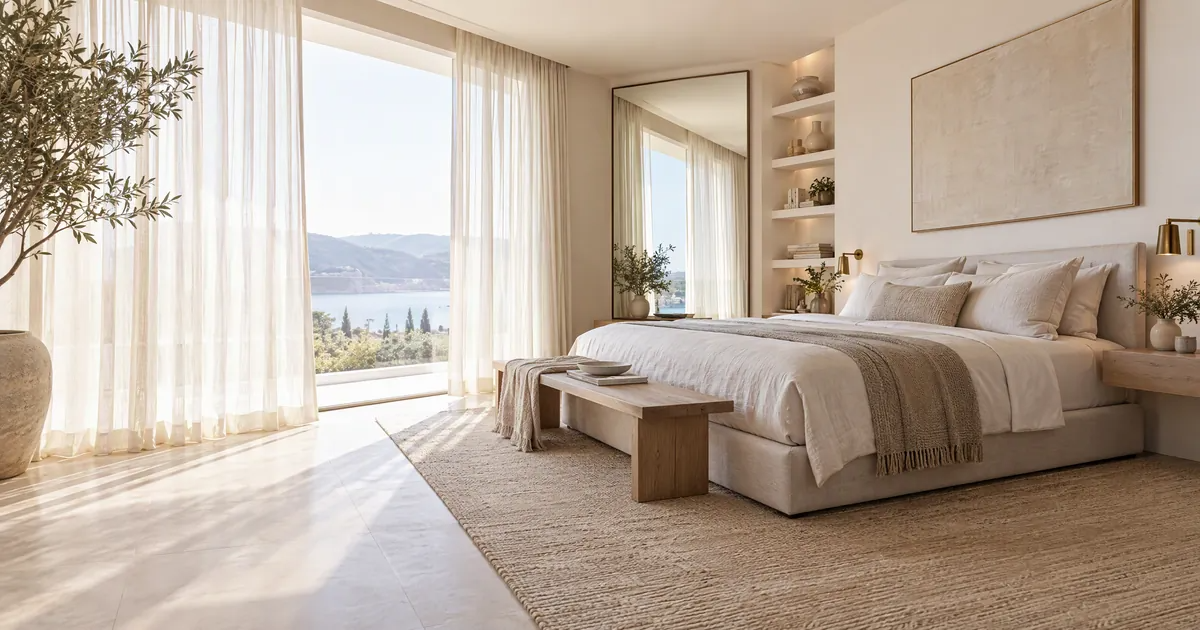
There is a particular frustration that comes with a bedroom that feels smaller than it is. You have measured it. You know the square footage is adequate. But something about the way the room reads makes it feel compressed, crowded, or simply not restful. The instinct is usually to pare down, to remove things, to make the room more minimal. Sometimes that helps. Often, the real answer is different, and more counterintuitive.
Understanding how to make your bedroom feel bigger is really about understanding how the eye reads a space. The techniques that change a bedroom’s perceived scale are mostly visual and spatial, not structural, which means they are available without a renovation budget. Let’s go over a few ways that actually works and make your resting area bigger than its measured square footage.
Go Wider With the Headboard
This is the single most counterintuitive and most effective design decision in the make your bedroom feel bigger toolkit. An extra-wide headboard, one that extends noticeably beyond the width of the mattress on both sides, makes a bedroom feel grander and more expansive rather than more crowded. The reason is that the eye reads the horizontal extent of the headboard as it reads the width of the room. A headboard that extends wall to wall, or close to it, pulls the eye across the full width of the space, creating a sense of scale that a mattress-width headboard cannot.
A standard-sized headboard that barely exceeds the width of the mattress leaves the walls on either side bare and disconnected, which makes the room read as fragmented and small. An extended headboard anchors the bed as a confident presence in the room rather than an afterthought. The scale feels intentional, and intentional scale reads as spacious.
Use Vertical Height
Rooms feel larger when the eye is drawn upward. Curtains hung at ceiling height, not at window height, are one of the most reliably effective techniques for making any room feel taller and more expansive. Mount the rod as close to the ceiling as the architecture allows, let the panels fall to the floor, and the window, and the room around it, appear significantly taller than it actually is.
Tall case furniture, a wardrobe or armoire that reaches toward the ceiling, works the same way. So does art hung higher than the standard eye-level convention, particularly in a bedroom with low or average ceiling height. Every element that draws the eye upward contributes to the sense that the bedroom feels bigger than its actual dimensions.
Choose the Right Rug Size
An undersized rug is one of the most common reasons a bedroom feels smaller than it should. A rug that only extends to the edge of the bed frame leaves the perimeter of the room bare and makes the room read as divided rather than unified. A rug that extends at least eighteen inches beyond the sides and foot of the bed grounds the room and creates a cohesive plane that reads as generous.
If the room cannot accommodate a large rug under the bed, consider placing runners on either side of the bed instead. This is less ideal but still better than the fragmented effect of an undersized central rug.
Edit the Furniture, Not the Quality
A bedroom that has too much furniture will always feel smaller than it is. But the instinct to simply remove things can leave a room feeling bare rather than spacious. The better approach is to edit the furniture to the essential pieces- bed, nightstands, storage- and make sure each remaining piece is appropriately scaled. How to make your bedroom feel bigger through furniture selection means fewer pieces chosen with real intention, not more pieces of lesser quality.
Furniture with legs, rather than pieces that sit directly on the floor, creates the visual impression of more floor area. A nightstand on slender legs reads differently from a solid bedside table, even if the footprint is identical.
Color and Light
Light paint colors do make rooms feel larger, but the effect is most pronounced when the ceiling is painted the same color as the walls, which removes the visual boundary between the two surfaces and makes the room feel taller and more expansive. A single continuous tone across walls and ceiling is one of the simplest and most effective spatial manipulations available without structural change.
Natural light is the most powerful tool available. Curtains that can be drawn fully to the side of the window during the day, maximizing the light entering the room, change how the space feels more than almost any other single decision.
Design Thinking Changes What Renovation Cannot
The techniques that make a bedroom feel genuinely larger are design techniques, not construction ones. Rose Ann Humphrey of Home Life brings decades of design expertise, built across New England and now applied throughout Charleston and the surrounding islands, to every bedroom and whole-home project she leads. Our goal is to help you love how you live and discover your own visual voice.