
Kitchen Cabinet Refacing vs Replacement: Which Is Better?

Kitchen renovations may seem easy, but some decisions can catch you off guard. The decision about kitchen cabinets is one of them. The wrong choice here costs more than the right one ever would have.
Your kitchen cabinets look dated. The doors are worn, the finish has lost whatever it once had, and every time you walk into the kitchen, you feel it. The logical question is whether you reface what is already there or replace the whole thing. Both paths can produce a genuinely transformed kitchen. The problem is that choosing the wrong one, for your specific kitchen, produces either unnecessary expense or a result that still does not solve the problem.
The decision between kitchen cabinet refacing vs replacement comes down to two factors: the structural condition of the existing cabinet boxes and the functionality of the current layout. Get those two assessments right and the correct answer becomes clear. Here’s how you do it.
What Refacing Actually Is
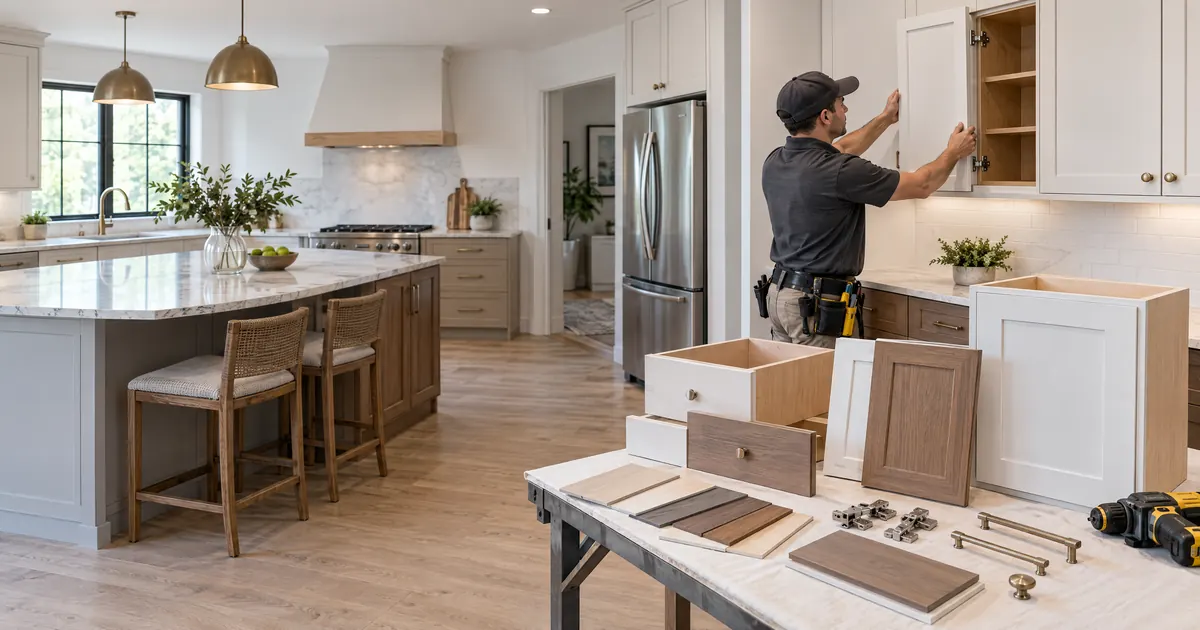
Cabinet refacing means keeping the existing cabinet boxes and replacing everything you see and touch: the doors, drawer fronts, and hardware, plus a new veneer or finish applied to the visible surfaces of the boxes themselves. The boxes stay. The visible layer changes completely.
Refacing is the right choice when the cabinet boxes are structurally sound, and the kitchen layout is working. If the boxes are square, stable, and free of water damage, then refacing is the right option. It also is if your main problem is that the kitchen looks dated rather than that it functions poorly. This decision can deliver a result that reads as a fully new kitchen without the cost and disruption of full replacement.
What Replacement Actually Is
Full cabinet replacement means removing the existing cabinets entirely and installing new boxes, doors, drawers, and panels from the ground up. It is the right choice when the cabinet boxes themselves are failing, or when the layout is the real problem and refacing would leave the fundamental issue unresolved.
Structural failure in cabinet boxes looks like swelling or soft wood at the sink base from an old leak, drawer boxes that bind because the structure is out of square, hinge areas with repeated stripped screws indicating weak material, or shelves that have bowed permanently under load. Any of these conditions means that new doors on old boxes would be putting a beautiful surface on a compromised foundation.
The Layout Question
Layout is where the kitchen cabinet refacing vs replacement decision gets clarified most quickly. Refacing preserves the existing footprint entirely. You cannot move the refrigerator, add a pantry wall, change the island size, or reconfigure the work triangle through refacing. If the layout is what frustrates you most about the kitchen, refacing will improve how it looks but not how it functions. Replacement is the only path to a genuinely different kitchen layout.
How to Evaluate Your Cabinet Boxes
Before deciding between refacing and replacement, do a basic structural check. Look under the sink base for soft wood, swelling, or any sign of moisture damage. Check the corners and joints for movement or gaps. Test the drawer operation for binding that suggests the boxes are out of square. Look at the hinge areas for stripped screws or repeated repairs. Check whether shelves have deflected permanently under load.
If the boxes pass this check, they are likely sound enough to reface. If any of these warning signs are present, replacement is almost certainly the more sound investment, because structural problems in cabinet boxes do not resolve with new doors.
What a Refacing Quote Should Include
If you decide to reface, clarify exactly what the scope covers before comparing quotes. Does it include new doors and drawer fronts? What about exposed box ends and toe kicks? Are new hinges and hardware included? Are drawer boxes being upgraded or only the fronts? What happens to any damaged panels or areas around the sink? Refacing scopes vary significantly from contractor to contractor, and comparing quotes that include different elements is not a useful comparison.
The Design Dimension of This Decision
Whether you are refacing or replacing, the aesthetic decision matters as much as the structural one. New door profiles, finishes, and hardware should be chosen in relation to the full kitchen direction, the countertops, the flooring, the paint color, and the way the kitchen connects to the rooms around it. Cabinet updates made in isolation from the rest of the kitchen palette tend to look updated rather than designed.
Rose Ann Humphrey of Home Life guides homeowners through exactly this kind of decision as part of full-service kitchen design and renovation across Charleston and the surrounding island communities. Her decades of practice, built in New England and now expanded to this market, mean she has seen every version of this problem and knows which answer is right. Our goal is to help you love how you live and discover your own visual voice.
Give us a call at 617-360-1008, and let’s make that decision together.