
How Much Do Interior Designers Charge for a Mood Board?

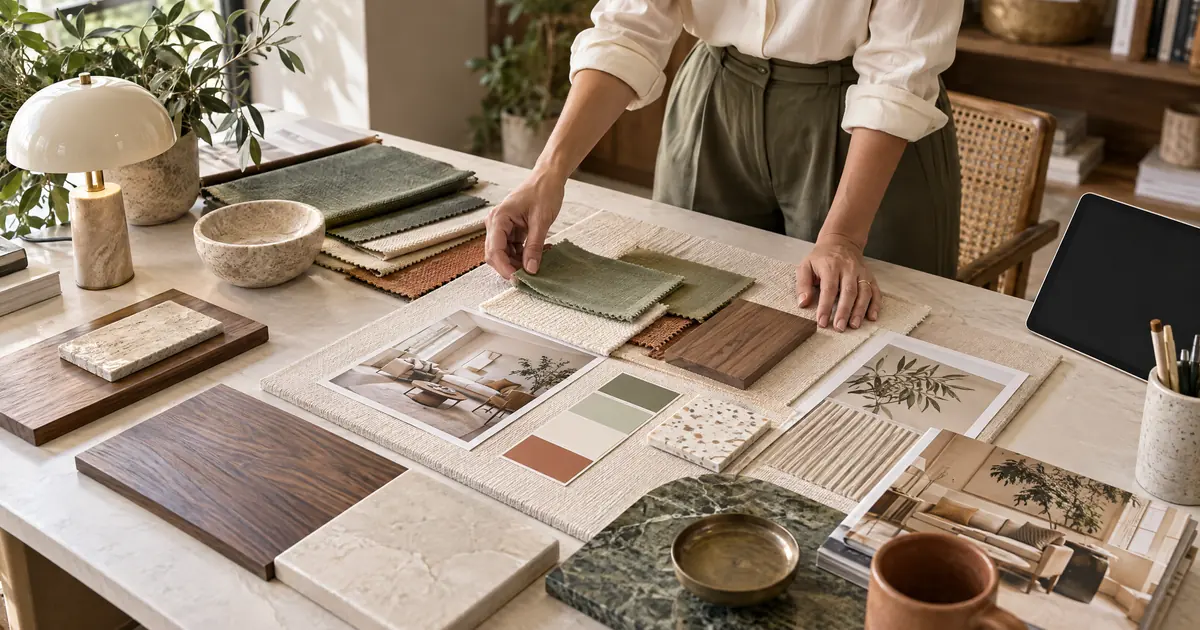
If you have ever wondered how much it costs to have a professional interior designer create a mood board for your home, you are in good company. It is one of the most searched questions in interior design, and the honest answer is that the number varies enough to be confusing without some context behind it. The mood board is often the entry point into a design relationship, and understanding how it is priced tells you a great deal about how that relationship is structured.
The question of how much interior designers charge for a mood board is really a question about how designers charge for their time, which takes several different forms depending on the designer’s experience, their fee structure, the market they are working in, and the scope of what the mood board is expected to deliver. Here is what the real numbers look like and what sits behind them.
The Numbers: What Industry Research Shows
Interior designer hourly rates across the United States generally fall between $100 and $300 per hour for experienced designers. Senior designers in major markets charge $200 to $300, while principals at established firms can charge $350 to $500 per hour for their time. For a mood board, which typically takes between three and eight hours to research, assemble, and present well, you are looking at a realistic cost of $300 to $2,500 depending on the designer’s rate and the depth of what the board covers.
Some designers price mood boards for interior design as a flat fee rather than hourly. A standalone concept board for a single room from a mid-career designer typically runs $350 to $750. A full design direction package that includes mood boarding across multiple rooms, material samples, and a design brief is a different scope entirely and will be priced accordingly.
What a Mood Board Actually Includes
The term mood board covers a wide range of deliverables, and understanding what you are paying for matters as much as the number itself. At the most basic level, a mood board is a visual collection of images, materials, and references that communicate the intended design direction for a space. At the most developed level, it is a curated design document that includes specific product selections, fabric samples from trade-only sources, paint and finish recommendations, and a clear articulation of how every element relates to every other.
A mood board from a designer with access to trade resources, including fabric houses like Kravet, Schumacher, Lee Jofa, and Brunschwig and Fils, carries material references that retail Pinterest boards cannot produce. These are the materials that differentiate a designed room from a decorated one, and they are only accessible through professional design relationships.
Why the Rate Varies So Much
When homeowners ask how much interior designers charge for a mood board, the variation they encounter reflects several real differences. Experience is the primary driver. A designer who has been specifying materials and developing design concepts for decades has a depth of knowledge that produces a more resolved, more accurate, and more valuable mood board than a newer designer working from the same brief.
Market location also affects rates. Designers in New York, Boston, and Los Angeles typically charge at the higher end of the scale. Designers who have built practices in those markets and are now expanding into new ones bring that level of expertise with them, which is what their rates reflect.
Finally, access to trade resources has a real value that is embedded in what a professional designer charges. The time spent developing relationships with fabric houses, stone vendors, furniture manufacturers, and specialty suppliers, and the resulting access those relationships provide, is part of what a professional rate covers. A mood board from a designer with that access is not the same product as one assembled from retail sources.
What a Mood Board Is Worth
The most useful way to think about the cost of a mood board is not as a standalone expense but as an investment in the clarity of direction that every subsequent decision in a renovation or redesign benefits from. A clear, well-developed design direction at the beginning of a project reduces the number of decisions made incorrectly, the number of materials purchased that do not belong in the room, and the number of revisions required after work begins.
The cost of an interior designer mood board at the beginning of a whole-home renovation is usually recovered many times over in avoided mistakes, more efficient material decisions, and a result that does not need to be revisited.
Rose Ann Humphrey’s Approach
Rose Ann Humphrey of Home Life develops design direction as part of every project she leads, drawing on decades of design experience built in New England and now applied throughout Charleston and its surrounding island communities. Her material access through trade-only resources, including the full range of fabric houses available to design professionals, means the design direction she develops for clients reflects quality and specificity that retail resources cannot match. Her goal is to help you love how you live with your remodeled or renovated home.