
How to Control Dust During Renovation

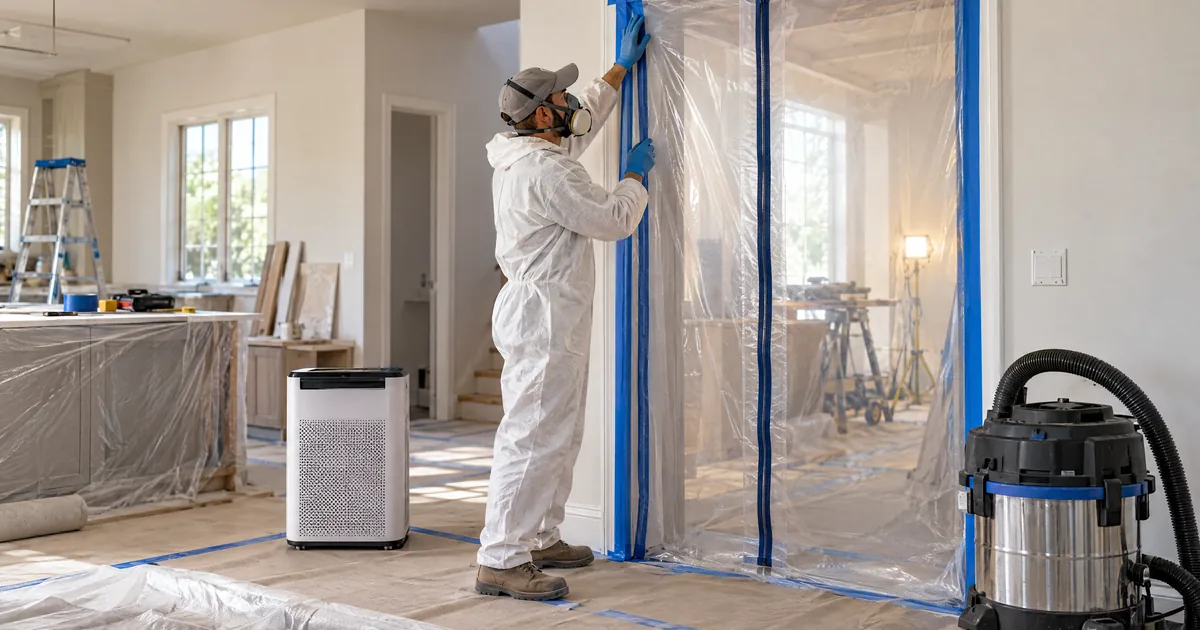
Anyone who has lived through an active renovation knows that dust is its own project. It gets into closets that were closed. It settles on surfaces three rooms away from where any work is happening. It coats the inside of electronics, finds its way into every fabric in the house, and creates a layer of fine particulate that takes weeks to fully eliminate even after the work is done. And beyond the cleaning inconvenience, construction dust contains real health concerns, from drywall particles to fine silica from cut tile.
Understanding how to control dust during renovation is not about eliminating all dust, which is not possible, but about containing it, managing it, and protecting both the occupants of the home and the finished areas of the house from the most significant exposure. These are the techniques that work.
Seal Off the Work Zone
The single most effective step in controlling dust during renovation is creating a physical barrier between the active work area and the rest of the home. Heavy-duty polyethylene sheeting, typically 6 mil thickness, is the standard material. It is taped over doorways, at ceiling height, and sealed at the floor. Every gap is taped. Any HVAC return in the work zone is covered with plastic sheeting and taped over, because an open return will circulate fine dust throughout the entire home’s ductwork.
For longer-duration projects, temporary dust control barriers with zippered access panels are available and worth the investment. They allow workers to move in and out without constantly taping and retaping plastic sheeting, and they create a more reliable seal over time.
Protect HVAC Systems
One of the most overlooked aspects of how to control dust during renovation is the HVAC system. Construction dust that enters ductwork can circulate through the entire home for months after the renovation is complete. Turn off the HVAC system to the work zone during active dusty work such as sanding, cutting tile, or demolishing drywall. Cover every vent and return in the work zone with polyethylene sheeting and tape. Change air filters more frequently than usual during the project.
For major projects involving significant drywall or masonry work, a duct cleaning service at the end of the project is worth considering, particularly if the HVAC system is a forced-air type. Fine drywall dust in ductwork degrades air quality and puts added strain on the system.
Use Wet Methods for Cutting
Cutting tile with a wet saw rather than a dry angle grinder dramatically reduces airborne dust. The water captures the fine silica particles before they become airborne, which is both a health consideration and a cleanliness one. Wet cutting also produces cleaner cuts, so there is no trade-off in the quality of the work.
For concrete and masonry work, wet grinding and wet drilling are standard practice in professional environments for the same reason. A contractor who uses dry cutting methods without adequate dust extraction in an occupied home is not approaching the work with appropriate care.
Negative Air Pressure and Air Scrubbers
For large-scale renovation projects, creating negative air pressure in the work zone is one of the most effective dust control techniques available during renovation. An air scrubber or HEPA-filtered fan is positioned to draw air out of the work zone and exhaust it outside. This creates a slight negative pressure in the contained area, meaning air flows in from the clean part of the house rather than out into it, dramatically reducing dust migration.
Portable HEPA air scrubbers are standard equipment on professional renovation sites and can be rented for homeowner-managed projects. Running one continuously in the work zone reduces airborne particle counts significantly and makes the workspace healthier for contractors as well.
Daily Cleanup Protocols
Dust does not just float. It settles and then gets disturbed again by foot traffic and air movement. Daily cleanup of the work zone, sweeping and damp-mopping at the end of each workday, prevents the accumulation of dusty substrate that becomes airborne again the next morning. Using a vacuum with a HEPA filter rather than a standard shop vacuum for fine dust prevents recirculation of captured particles.
Establishing a protocol for workers to remove or cover footwear when moving from the work zone to finished areas of the home prevents dust transport by foot traffic, which is one of the most consistent sources of dust migration.
Professional Project Management Addresses This From Day One
Dust control is one of the reasons that professional project management makes renovation projects better for the homeowner. Rose Ann Humphrey of Home Life coordinates every phase of the renovation projects she leads, including the protection of finished areas and the management of site conditions throughout the build. Her practice, built across decades in New England and now applied throughout Charleston and the surrounding islands, means she brings real-world project management experience to every engagement. Our goal is to help you love how you live and discover your own visual voice.