
When Remodeling A Kitchen What Comes First: Floors Or Cabinets

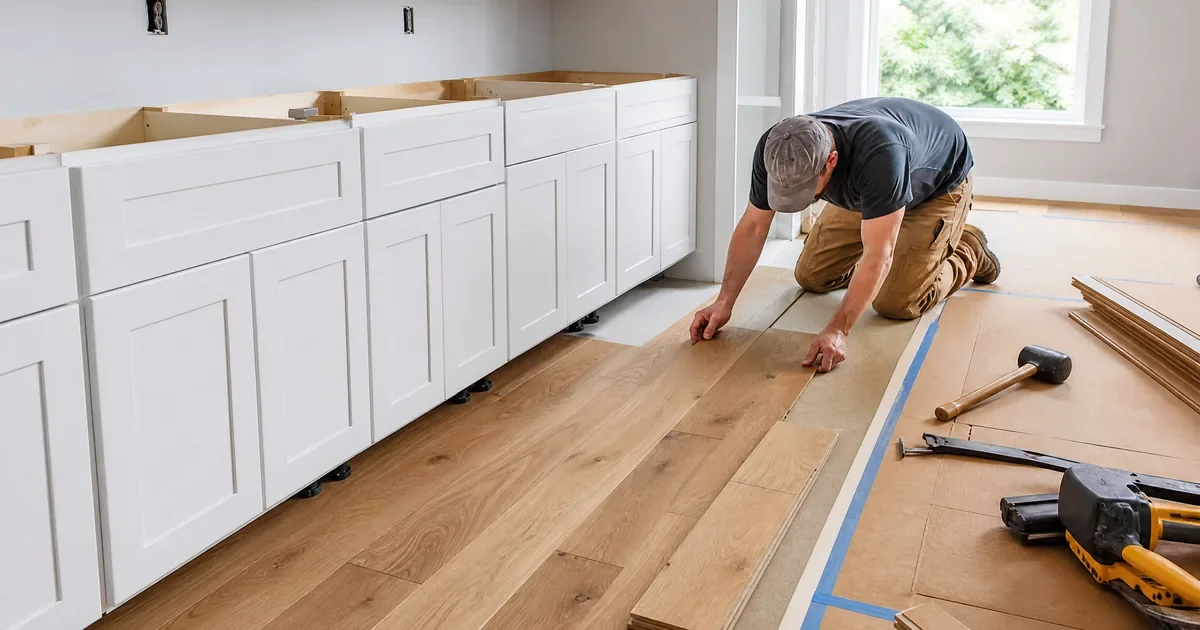
It is one of the most common practical questions in a kitchen renovation, and it is one where getting the answer wrong creates problems that are both visible and expensive to correct. When remodeling a kitchen, what comes first, floors or cabinets, is a question with a clear professional answer, and understanding the reasoning behind it is as useful as knowing the sequence itself.
The Short Answer: Cabinets First, Floors Second
In most kitchen remodels, cabinets are installed before flooring. The reasoning is straightforward and practical. Cabinets sit on the floor, and the flooring that will be visible in the finished kitchen is the flooring that appears in front of and beside the cabinets, not underneath them. Installing flooring before cabinets means paying for material and installation that will be permanently hidden under the cabinet base, which is unnecessary cost and unnecessary labor.
There is also a practical protection argument. A kitchen remodel is a construction process, and construction processes involve heavy materials, tools, and foot traffic. Installing a finished floor before the cabinets are in place exposes it to damage during the most disruptive phase of the project. Cabinets first, floors second protects the finished floor from the worst of the construction process.
When The Answer Changes
The cabinets-first sequence is the standard, but there are situations where it changes. If the flooring material is hardwood or engineered wood that needs to acclimate in the space before installation, the timing may shift. If the kitchen layout is being reconfigured so that cabinets will be installed in locations that were previously open floor, the subfloor preparation work that precedes flooring installation may need to happen before cabinet placement.
Understanding when remodeling a kitchen, what comes first floors or cabinets also depends on the type of flooring being installed. Tile flooring, which requires a concrete or cement board substrate and a curing period after installation, behaves differently in the sequencing than hardwood or luxury vinyl plank. A design professional who coordinates the full renovation process will establish the correct sequence for the specific materials being used in a specific kitchen.
Why The Sequence Is A Design Decision As Much As A Construction One
The sequence in which a kitchen is renovated is not only a logistical question. It is a design quality question. A kitchen where the flooring terminates awkwardly at the cabinet base, where the grout lines do not align with the cabinet layout, or where the floor material reads as an afterthought relative to the cabinetry is a kitchen where the sequencing was not handled with design intent.
A design-led renovation considers how the floor and the cabinetry will read together as a finished composition before either is installed. The flooring direction, the tile layout, the transition between kitchen flooring and adjacent spaces: all of these decisions are made in the design phase, and the construction sequence then serves those decisions rather than determining them.
Other Sequencing Considerations In A Kitchen Remodel
The floor-versus-cabinets question is part of a broader sequencing logic that governs a kitchen remodel. Demolition comes first. Structural work, including any wall removal or addition, follows. Rough plumbing and electrical work happens before any finish materials go in. Drywall and ceiling work precede cabinets and flooring. Countertops cannot be templated until cabinets are installed. Backsplash tile goes in after countertops are set. Appliances and plumbing fixtures are among the last things to be installed.
Every step in this sequence depends on the one before it, which is why the question of when remodeling a kitchen what comes first, floors or cabinets is really a question about whether you have a clear sequencing plan for the whole project, not just one stage of it.
How A Designer Coordinates The Full Kitchen Renovation Sequence
Rose Ann Humphrey of Home Life has been coordinating luxury kitchen renovations for over three decades across New England, primarily Boston, and now across Charleston and the surrounding islands. Her projects are managed through a full design-to-construction process where the sequencing of every phase is established in the planning stage, not discovered during construction.
Our goal is to help people love how they live and discover their own visual voice. A kitchen that has been designed and sequenced correctly is one where every element reads as part of a considered whole. If you are planning a whole-home renovation that includes a kitchen transformation and want professional coordination of the entire process, Rose Ann would be glad to talk. Call Rose Ann at 617-360-1008 to begin that conversation.
3 thoughts on “When Remodeling A Kitchen What Comes First: Floors Or Cabinets”